
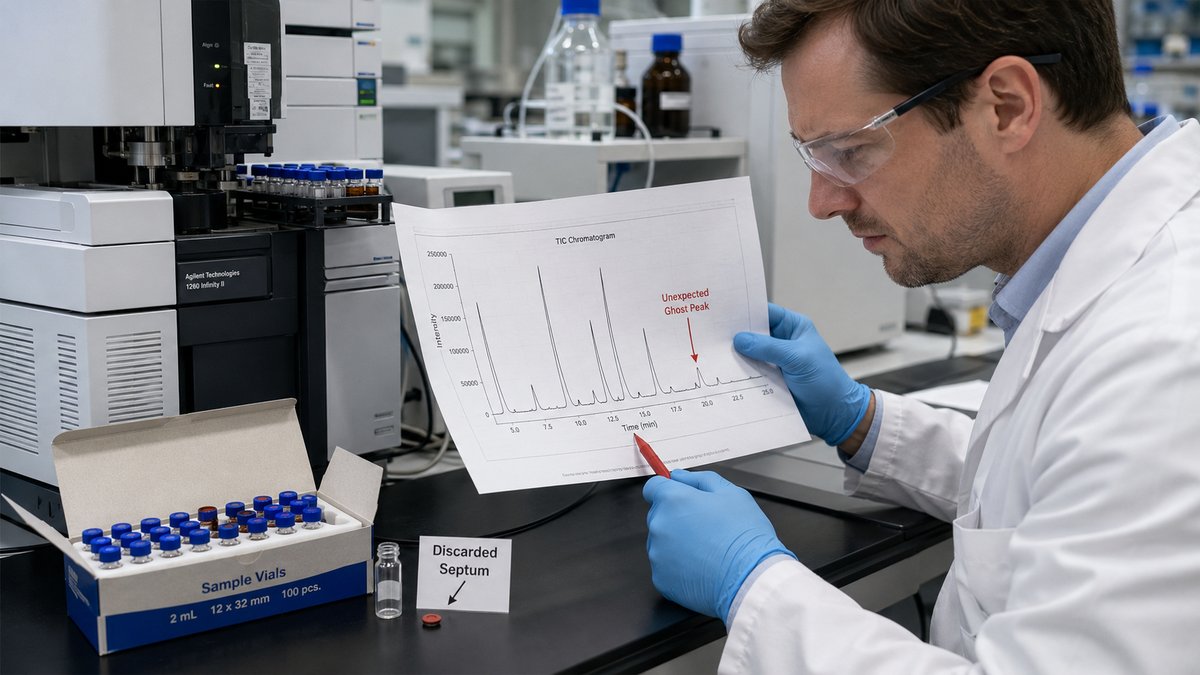
Mobile phase filtration is a critical step in high-performance liquid chromatography (HPLC), ultra-high-performance liquid chromatography (UHPLC), and liquid chromatography-mass spectrometry (LC-MS). The choice between 0.22 micron and 0.45 micron syringe filters directly impacts system performance, column longevity, and data quality. This guide provides an objective comparison of these two pore sizes, explores membrane material selection, chemical compatibility, filtration speed dynamics, and offers a practical workflow for selecting the appropriate filter.
Understanding Pore Size: 0.22um vs 0.45um
The primary distinction between 0.22 micron and 0.45 micron filters lies in their particle retention capabilities. A 0.22 micron filter retains particles larger than 0.22 micrometers, while a 0.45 micron filter retains particles larger than 0.45 micrometers. This difference has significant implications for chromatography applications.
0.22 Micron Filters: Sterilization and Ultra-Fine Particle Removal
0.22 micron syringe filters are designed for applications requiring the removal of very fine particulates and microorganisms. In microbiology, this pore size is considered sterilizing-grade because it retains bacteria such as Pseudomonas diminuta, which is approximately 0.3 micrometers in size. In chromatography, 0.22 micron filters are essential for:
- UHPLC systems operating at pressures above 600 bar, where column frits have sub-2 micron pores
- LC-MS applications where particulate contamination can cause ion suppression or source fouling
- Mobile phases containing buffers or additives that may form micron-sized precipitates over time
- Samples with high viscosity or complex matrices that require rigorous particle removal
The smaller pore size provides a higher level of protection against column plugging and system blockages. However, this comes at the cost of increased backpressure and slower filtration rates compared to 0.45 micron filters.
0.45 Micron Filters: Routine HPLC Applications
0.45 micron syringe filters are the standard choice for routine HPLC mobile phase filtration. They effectively remove most common particulates, including dust, undissolved salts, and polymer fragments from solvent bottles. Key applications include:
- Conventional HPLC systems operating at pressures below 400 bar
- Mobile phases prepared from HPLC-grade solvents with minimal particulate load
- Samples that are relatively clean and do not contain sub-micron particles
- High-throughput environments where filtration speed is a priority
The larger pore size allows for faster flow rates and lower backpressure, making 0.45 micron filters suitable for rapid sample preparation. However, they may not retain very fine particles that could compromise UHPLC performance or cause baseline noise in sensitive detection methods.
Membrane Material Selection
The filter membrane material determines chemical compatibility, mechanical strength, and adsorption characteristics. Each material has distinct properties that make it suitable for specific mobile phase compositions.
Polytetrafluoroethylene (PTFE)
PTFE membranes are chemically inert and compatible with almost all organic solvents, including strong acids, bases, and aggressive solvents like dimethyl sulfoxide (DMSO) and tetrahydrofuran (THF). PTFE is hydrophobic and requires pre-wetting with a compatible organic solvent before use with aqueous solutions. It is ideal for:
- Non-polar organic mobile phases
- Solvents that dissolve or attack other membrane materials
- LC-MS applications requiring low extractables
Polyvinylidene Fluoride (PVDF)
PVDF membranes offer broad chemical compatibility with both aqueous and organic solvents. They are hydrophilic and do not require pre-wetting for aqueous solutions. PVDF exhibits low protein binding, making it suitable for biological samples. Common applications include:
- Mixed mobile phases containing water and organic solvents
- Reversed-phase HPLC with acetonitrile or methanol gradients
- Samples containing proteins or peptides
Nylon (Polyamide)
Nylon membranes are hydrophilic and compatible with most common HPLC solvents, including water, alcohols, and acetonitrile. They have high mechanical strength and good thermal stability. However, nylon is not compatible with strong acids, bases, or aggressive solvents like dimethylformamide (DMF). Nylon filters are suitable for:
- Routine reversed-phase HPLC
- Aqueous mobile phases with low organic content
- Filtration of buffer solutions and salt-containing mobile phases
Polyethersulfone (PES)
PES membranes are hydrophilic with low protein binding and high flow rates. They are chemically compatible with a wide range of aqueous solutions and some organic solvents. PES is not recommended for strong acids, bases, or halogenated hydrocarbons. Applications include:
- Aqueous mobile phases and biological samples
- Buffered solutions with pH between 3 and 10
- Filtration of cell culture media and protein solutions
Regenerated Cellulose (RC)
RC membranes are hydrophilic with very low protein binding and excellent chemical compatibility with most organic solvents, including polar aprotic solvents. RC is mechanically weaker than other materials and may not withstand high pressures. It is suitable for:
- LC-MS mobile phases requiring low extractables
- Solvents that are incompatible with nylon or PES
- Applications where minimal sample adsorption is critical
Chemical Compatibility Considerations
Chemical compatibility is paramount when selecting a syringe filter. Incompatible membranes can dissolve, swell, or release extractables into the mobile phase, compromising chromatography and damaging the system.
For each membrane material, verify compatibility with the specific solvent or solvent mixture. Key points to consider:
- Strong acids (pH below 2) and strong bases (pH above 10) can degrade nylon, PES, and RC membranes. PTFE and PVDF are generally resistant to extreme pH conditions.
- Halogenated solvents such as dichloromethane and chloroform can attack nylon and PES membranes. PTFE and RC are compatible with these solvents.
- Polar aprotic solvents like DMSO and DMF dissolve nylon and PES membranes. PTFE and RC are suitable alternatives.
- Esters and ketones may cause swelling in certain membranes. Always test compatibility with a small volume before bulk filtration.
Manufacturers provide chemical compatibility charts that indicate which membrane materials are suitable for specific solvents. Consult these charts before selecting a filter.
Filtration Speed and Backpressure Tradeoff
The pore size directly influences filtration speed and backpressure. A 0.22 micron filter has approximately twice the resistance to flow compared to a 0.45 micron filter of the same membrane area. This means:
- For a given sample volume, 0.22 micron filtration takes roughly twice as long as 0.45 micron filtration.
- The backpressure generated by a 0.22 micron filter is significantly higher, which can exceed the pressure rating of some syringe filters or syringes.
- Viscous mobile phases or samples with high particulate load may require excessive force with 0.22 micron filters, increasing the risk of filter rupture or syringe failure.
In practice, the filtration speed tradeoff is acceptable when the application demands ultra-fine particle removal. For routine HPLC, the faster flow of 0.45 micron filters improves workflow efficiency without compromising column protection.
Pore Size Selection Criteria
Choosing between 0.22 micron and 0.45 micron filters depends on several factors:
- System pressure: UHPLC systems with sub-2 micron particles require 0.22 micron filtration to prevent column frit blockage. Conventional HPLC systems operating below 400 bar are adequately protected by 0.45 micron filters.
- Detector sensitivity: LC-MS and other sensitive detectors benefit from 0.22 micron filtration to reduce baseline noise and background signals caused by fine particulates.
- Mobile phase composition: Buffers that may precipitate over time or solvents prone to forming fine particulates require 0.22 micron filtration.
- Sample cleanliness: Samples with high particulate load may cause premature clogging of 0.22 micron filters. In such cases, pre-filtration through a larger pore size (e.g., 0.45 micron) followed by 0.22 micron filtration can be effective.
- Regulatory requirements: Some pharmacopoeial methods specify 0.22 micron filtration for sterile or particulate-free mobile phases.
Applications in Different Chromatography Systems
HPLC Systems
For standard HPLC with 3 to 5 micron particle columns, 0.45 micron syringe filters provide adequate protection. The column frits have pores larger than 0.45 microns, so particles retained by the filter will not reach the column bed. Using 0.22 micron filters in HPLC is acceptable but unnecessary unless the mobile phase contains sub-micron particulates.
UHPLC Systems
UHPLC columns with sub-2 micron particles have frits with pores as small as 0.5 microns. Particles larger than 0.5 microns can block the frit, leading to pressure increases and column damage. Therefore, 0.22 micron filtration is recommended for UHPLC mobile phases to ensure removal of particles that could compromise column performance.
LC-MS Systems
LC-MS requires exceptionally clean mobile phases to avoid ion suppression, adduct formation, and source contamination. 0.22 micron filters are standard for LC-MS applications because they remove fine particulates that can cause background noise and reduce sensitivity. Additionally, low-extractable membrane materials like PTFE or RC are preferred to minimize contamination from the filter itself.
Pre-Filter and In-Line Filtration Considerations
In addition to syringe filtration, many chromatography systems incorporate in-line filters between the pump and injector. These in-line filters typically have 0.5 to 2 micron porosity and serve as a secondary barrier to protect the column. When using 0.22 micron syringe filters for mobile phase preparation, the in-line filter may have a larger pore size, so it does not provide additional particle retention. Conversely, 0.45 micron syringe filters allow some particles to pass, which are then captured by the in-line filter.
For maximum protection, some laboratories use pre-filtration through a 0.45 micron filter followed by in-line 0.22 micron filtration. This approach reduces the particle load on the final filter, extending its lifespan and maintaining flow rates.
Practical Selection Workflow
Follow this step-by-step workflow to select the appropriate syringe filter for mobile phase filtration:
- Determine the chromatography system type: UHPLC, LC-MS, or conventional HPLC.
- Identify the mobile phase composition: aqueous, organic, mixed, or aggressive solvents.
- Check chemical compatibility of candidate membrane materials with the mobile phase.
- Assess the required pore size based on system pressure and detector sensitivity.
- Evaluate sample viscosity and particulate load to estimate filtration speed.
- Select a membrane material that offers the best balance of compatibility, low extractables, and flow rate.
- For routine HPLC with standard solvents, choose 0.45 micron nylon or PVDF filters.
- For UHPLC or LC-MS, choose 0.22 micron PTFE or RC filters.
- For viscous samples or high particulate loads, consider pre-filtration through a 0.45 micron filter before final 0.22 micron filtration.
- Test a small volume of mobile phase with the selected filter to verify compatibility and flow performance.
By following this workflow, chromatographers can ensure optimal filtration without compromising system performance or data quality. The choice between 0.22 micron and 0.45 micron syringe filters ultimately depends on the specific requirements of the application, with pore size selection guided by particle retention needs, chemical compatibility, and operational efficiency.
Related Resources from hplcvials.com: